Why people have braces
- Teeth that are crowded or stick out
- Large gaps between teeth
- Top and bottom teeth that don't meet properly, such as an overbite or underbite
- Teeth whose position makes them hard to clean or makes chewing difficult
Types of braces
- Metal braces: stainless steel brackets and wires
- Ceramic braces: clear or tooth-coloured brackets that are less noticeable, but not as strong as metal, so treatment can take a little longer
- Lingual braces: fixed to the back of the teeth
- Self-ligating braces
- Clear aligners: a series of removable clear trays
Not every type suits every case. Your orthodontist will explain which options fit your teeth.
How our dentists manage it
How we manage your braces and orthodontics
Assess and explain
Our orthodontist examines your teeth and bite and explains what braces can change, which type suits you and roughly how long it will take.
Agree the plan and cost
You know the plan, how often you will need to come and the full cost before treatment starts.
Adjust regularly
Fixed braces are adjusted every 6 to 8 weeks, and each visit moves the teeth a little further.
Hold the result
When the braces come off you get a retainer, and we tell you how long to wear it.
Metal, ceramic or clear aligners: which suits you?
Most people who ask us about braces in Rawalpindi want to know which kind to choose. Metal braces are the strongest and the most widely used, and they cope with almost any amount of tooth movement, so they are often the first choice for teenagers and for bigger corrections. Ceramic braces work the same way but use tooth-coloured brackets, which many adults prefer for work or university. The brackets are more brittle than metal, so treatment can take a little longer, and the small elastic ties around them can pick up colour from tea and curry until they are changed at your next visit.
Clear aligners are a series of removable trays, each moving the teeth a small step. They are almost invisible and you take them out to eat and brush, but they only work if you wear them most of the day and night, usually about 22 hours, and they suit milder crowding and gaps better than complex bites. At your first visit our orthodontist checks your teeth and bite and tells you honestly which of the three fits your case, how long it should take and what it costs.
How fixed braces work
Brackets are fixed to each tooth and joined by a wire. The wire puts gentle, steady pressure on the teeth, which moves them over time. It is adjusted at regular visits, usually every 6 to 8 weeks. Treatment takes about two years on average, depending on how far the teeth need to move.
Looking after your teeth with braces
- Brush with fluoride toothpaste in the morning, at night and after meals
- Use interdental brushes every day to clean around the brackets
- Avoid hard, crunchy and sticky foods, sugary snacks and chewing gum
- Keep up your regular check-ups
Retainers after braces
When the braces come off, teeth tend to drift back towards where they started. A retainer holds them in their new position, and your orthodontist will tell you how long to wear it.
How long treatment takes
On average, braces take about two years. Some people finish in under 12 months and some need up to three years, depending on how far the teeth need to move. The type of brace matters too. Metal braces take about 20 months on average. Ceramic braces can take 12 to 36 months, because their brackets are not as strong.
Who treats you
Braces and Orthodontics at Dental Plus
Dental Plus was founded in 1984 by an orthodontist, Prof. Dr Amjad Mahmood, a former president of the Pakistan Association of Orthodontists. Today the clinic that sees a child's teeth coming through at check-ups can also plan braces when they're needed.
Orthodontic treatment at Dental Plus is planned by our two consultant orthodontists, Dr Afraaz Khan and Dr Obaid Ullah Qureshi. We treat teenagers and adults, and you will know the plan and the cost before treatment starts.
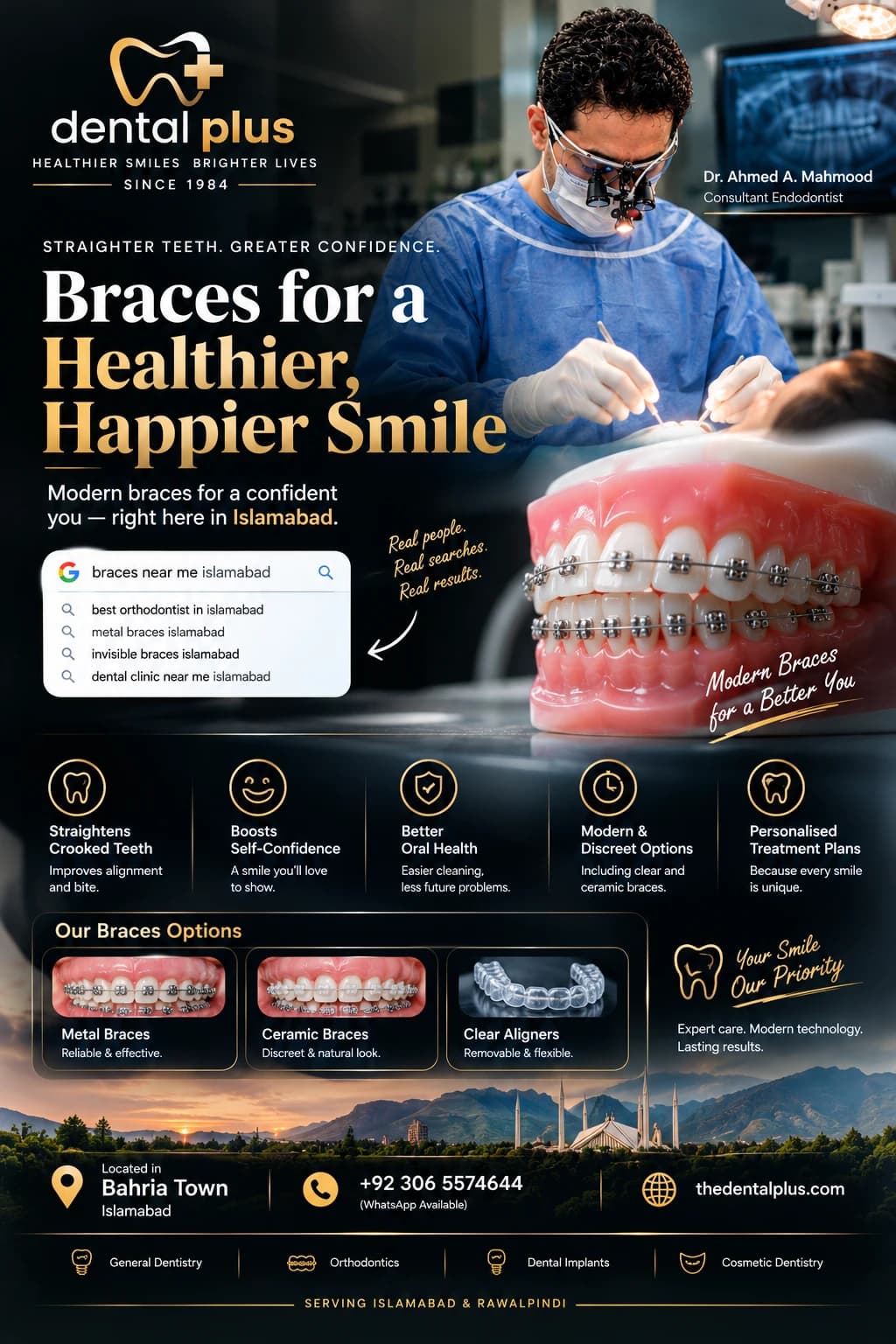
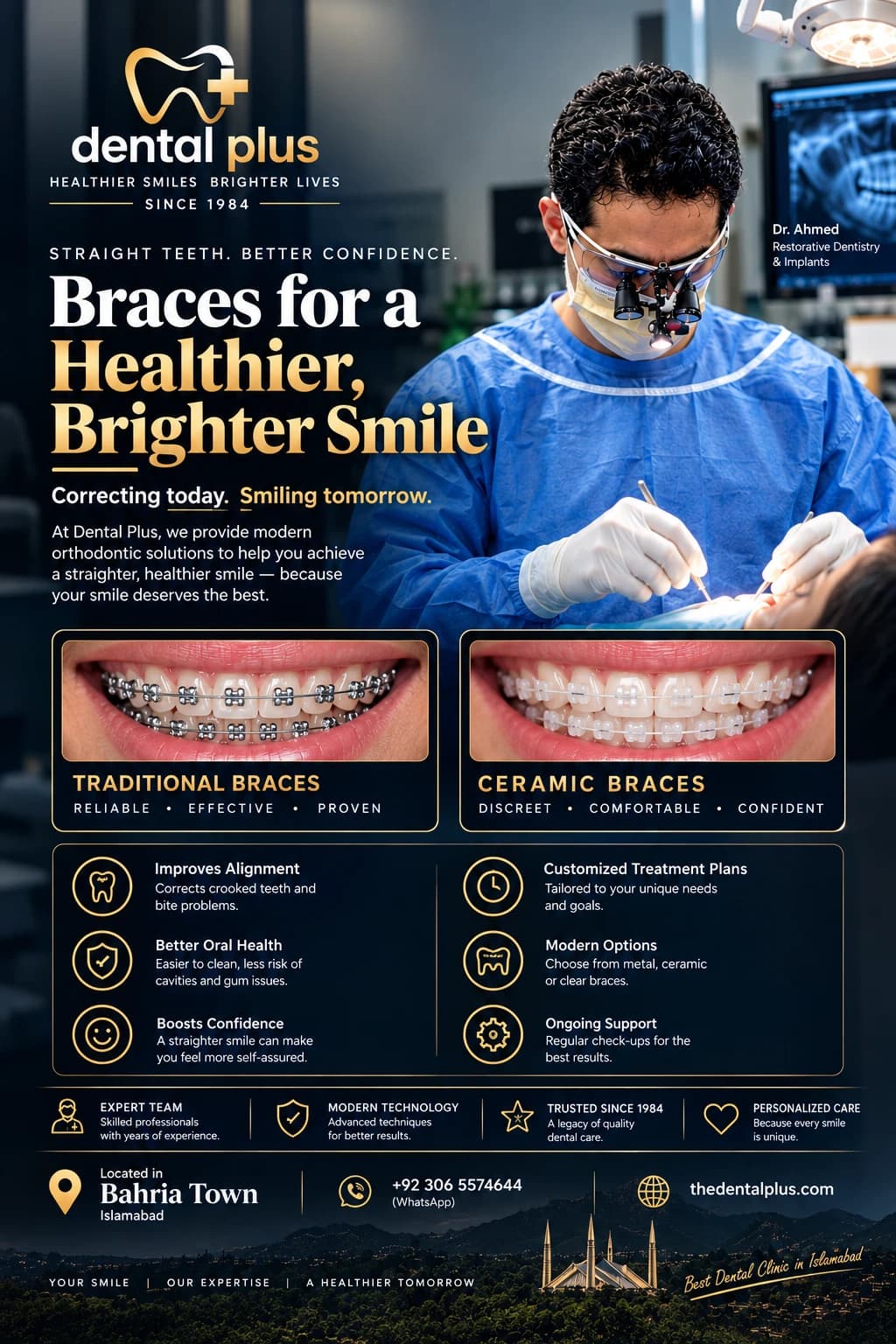
Looking for braces in Rawalpindi or an orthodontist in Bahria Town? Orthodontics is where Dental Plus began: our founder, Prof. Dr Amjad Mahmood, is an orthodontist and a former two-term President of the Pakistan Association of Orthodontists. Today braces are planned by our FCPS consultant orthodontists, Dr Afraaz Khan and Dr Obaid Ullah Qureshi, who offer metal braces, ceramic braces and clear aligners for teenagers and adults. Patients come to our Bahria Town Phase 4 clinic from Saddar, DHA and across Rawalpindi and Islamabad. Book a braces consultation.
- Consultant OrthodontistDr Afraaz KhanBDS, FCPSBraces for crowded, gapped or crooked teeth, for teenagers and adults.
- Consultant OrthodontistDr Obaid Ullah QureshiBDS, FCPSOrthodontic assessments, braces and retainers.
The dentists are very professional and highly qualified and they are using the modern tools and dental treatment techniques.”Read more Dental Plus patient reviews
Common questions about braces and orthodontics
How long do braces take?
About two years on average. Some people finish in under 12 months and some need up to three years, depending on how far the teeth need to move.
Am I too old for braces?
No. Our orthodontists treat adults as well as teenagers.
Do you offer clear aligners in Rawalpindi?
Yes. Alongside metal and ceramic braces, our orthodontists offer clear aligners at our Bahria Town clinic. They suit milder crowding and gaps, and work only if you wear them about 22 hours a day.
How much do braces cost in Rawalpindi?
It depends on the type of braces and how much your teeth need to move. After an assessment, our orthodontist gives you the full cost of the whole treatment, including the retainer, before anything starts.
Who is the best orthodontist in Bahria Town Rawalpindi?
Look for an FCPS-qualified orthodontist who explains the plan and the full cost before starting. At Dental Plus, braces are planned by two FCPS consultant orthodontists, Dr Afraaz Khan and Dr Obaid Ullah Qureshi, in a clinic founded by an orthodontist in 1984.
Do I need a retainer afterwards?
Yes. Without one, teeth tend to move back towards where they started. Your orthodontist will tell you how long to wear it.
How often will I need appointments?
Usually every 6 to 8 weeks with fixed braces, so the orthodontist can adjust them.
What should I avoid eating with braces?
Hard, crunchy and sticky foods, sugary snacks and chewing gum, until the braces come off.
Related treatments
- Veneers & BondingFixing chips, gaps, stains and shape with bonding or veneers.
- Teeth WhiteningLightening the natural colour of your teeth, safely.
- Children's DentistryFirst visits, fluoride, fissure sealants and calm check-ups for children.
- Check-ups & General DentistryWhat happens at a check-up, how often to come and the everyday treatments behind it.
How this guide was made
Dental Plus, a family dental clinic in Bahria Town, Rawalpindi, publishes this guide. It was drafted with the help of AI writing tools. Every medical statement was then checked against the sources below, last on 6 October 2026. What we say about our own clinic, our dentists and how we treat patients comes from the clinic. Patient quotes are copied word for word from Google reviews.
This page is general information, not a diagnosis. For advice about your own teeth, book an examination.